
Making Resilient Commercial Floors Last in Sioux Falls

Facility managers around Sioux Falls put heavy demands on their commercial floors. From retail showrooms to clinic corridors, resilient flooring covers a lot of that square footage, and there’s a good chance your building has some. The category includes vinyl composition tile (VCT), luxury vinyl plank (LVP), sheet linoleum, and rubber.

There are good reasons these materials are so common. Resilient flooring is durable, handles heavy foot traffic, and stands up to water better than commercial carpet. What building owners often get wrong is how long these floors should actually last. Too many treat a cycle of premature aging and expensive replacement as a normal cost of doing business.

It doesn’t have to be. How you maintain a resilient floor has more to do with its lifespan than the material itself. Shift the focus from reactive repairs to steady, correct maintenance, and these floors can stay intact and presentable for decades instead of years.

Know What You're Walking On

A VCT floor running down a commercial corridor in a Sioux Falls buildingYou can’t maintain a floor correctly if you don’t know what it is. Resilient flooring gets its name from a slight give underfoot, which also makes it more comfortable for people who stand all day.

VCT is everywhere in schools and grocery stores. It’s made from limestone dust, thermoplastic binders, and pigments, and it’s porous, so it needs a protective finish to seal the surface and keep dirt from grinding into it.

LVP shows up in a lot of modern offices because it mimics wood or stone, and it comes with a tough wear layer built in at the factory.

Rubber flooring is standard in gyms and physical therapy clinics for its slip resistance and shock absorption. Linoleum is a natural product made from linseed oil and wood flour, and it’s a common choice in healthcare settings for its durability.

Each of these reacts differently to dirt and cleaning chemicals, so a single one-size-fits-all approach tends to cause problems. A good crew figures out what the floor is before putting any water on it.
The Real Cost of Replacing Too Soon

Building owners tear out resilient floors far earlier than they need to. They see a dull, scratched floor and assume the material is finished.

Replacing a commercial floor is expensive, and the sticker price is only part of it. You pay for material and installation labor, but you also shut down sections of the building while the work happens, lose the use of that space, and deal with the dust a tear-out kicks into the HVAC system. Then there are disposal fees for the old flooring.

Here’s the part that gets missed: in most cases, the floor itself isn’t failing. The protective finish is just dirty or scratched. The surface looks bad while the core material is still solid. Restoring the finish addresses the appearance and pushes the big replacement cost years down the road.

When Old Maintenance Habits Do the Damage

The traditional way to maintain VCT and linoleum is acrylic wax: multiple coats built up into a protective layer. Over time, foot traffic scratches the wax, dirt settles into the scratches, and the finish yellows under the lights.

When it looks bad enough, crews strip and re-wax, flooding the floor with a chemical stripper to melt the old wax, scraping it up, and starting over. Done occasionally and correctly, that’s a normal part of floor care. The trouble comes when it’s done too often, too aggressively, or with too much water.

That’s when stripper works into the seams between tiles and starts breaking down the adhesive underneath. Over a few years, tile corners can curl, moisture gets trapped beneath them, and you end up with lifting tiles and the conditions for mold. The heavy scrubbing that goes with stripping can also gouge softer materials like linoleum. Repeated enough, the cycle of harsh chemicals and aggressive scrubbing shortens the life of the floor instead of protecting it.

Newer Coatings, Fewer Strip-and-Wax Cycles

The floor-care industry has better options than acrylic wax, and high-performance coatings can change the whole maintenance picture for a resilient floor.

Polyurethane coatings act as a semi-permanent shield. Unlike wax, they don’t need regular chemical stripping. Once applied, they form a hard barrier that resists deep scratches and staining.

Some of these finishes use UV curing: the technician applies the liquid coating, then passes a UV light machine over it, which cures the coating almost immediately. That means the floor is ready for traffic without shutting a facility down for a whole weekend, and it avoids repeated rounds of stripping chemicals. It also seals the seams, so water and dirt can’t work into the joints, which is a big part of what extends the life of the material.

Daily Janitorial Work Still Matters

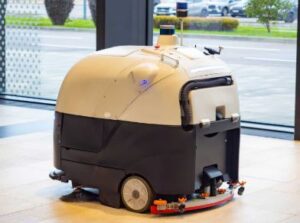
An auto-scrubber cleaning a large resilient floor in a commercial spaceEven the best coating needs consistent daily floor care, because dirt is what wears a floor down. Fine grit acts like sandpaper underfoot. Every step grinds it into the finish, dulling it and creating spots for bacteria to hide.

Good daily cleaning stops that abrasion. It starts with dust control: microfiber dust mops grab and hold fine particles instead of pushing them around the way a cotton mop does.

Then comes damp mopping, where dilution matters. Too much cleaner leaves a sticky residue that pulls in new dirt right away, and a cleaner with the wrong pH can cloud the finish. Neutral-pH detergents made for resilient floors are the right tool. For large open areas, auto-scrubbers apply clean water, scrub, and vacuum the dirty water back up, so the floor is clean and dry before anyone walks on it.
Sioux Falls Weather Is Hard on Floors

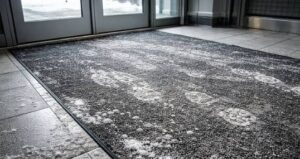
Salt residue and floor mats at a commercial building entrance during a Sioux Falls winterA floor plan in Sioux Falls has to account for the weather, which drags a lot of contamination into a building.

Winter is the biggest threat. Rock salt and calcium chloride de-icers get tracked straight onto resilient floors, and the residue leaves a white, crusty film that dulls and damages the finish if it sits. A plain neutral cleaner often won’t lift salt residue well; a salt-neutralizing cleaner does a better job. Left on the floor, that residue eats at the top layer of the material.

Spring brings a different mess. Melting snow and rain turn soil into sticky mud that clings to shoes and ends up in the lobby, then dries into a fine dust that settles everywhere.

Temperature swings matter too. Cold makes materials contract, heat and humidity make them expand, and that constant movement stresses the adhesive under the floor. That’s why a cleaning plan has to keep water from sitting on the floor. Standing water finds its way into seams and speeds up adhesive failure.

Stopping Damage Before It Starts

A little prevention goes a long way, and walk-off matting is one of the simplest protections. A good matting system traps dirt and moisture right at the door.

That usually means scraper mats outside to knock snow off boots, absorption mats in the vestibule to catch water, and finishing mats in the lobby to grab fine dust. Mats only work if they’re vacuumed daily, though. A full mat just hands the dirt back to the floor.

Furniture is another quiet source of damage. Metal chair legs gouge VCT, and hard plastic casters chew up the wear layer on LVP. Felt pads on chair legs and soft rubber casters made for hard floors are cheap fixes that head off expensive damage.

The Safety and Air-Quality Side

Floor upkeep isn’t only about appearance. When a finish wears unevenly, some spots get slick and others sticky, and that inconsistent traction is where people slip or trip. Keeping the finish uniform keeps the footing predictable.

Clean floors also help with indoor air quality. Resilient floors don’t hold dust the way carpet does, but if that dust isn’t removed, the HVAC system can pull it into the air, which can aggravate allergies for the people in the building. Thorough daily cleaning captures the dust and gets it out instead.

Choosing a Floor-Care Partner

Protecting resilient flooring takes real know-how, which is why it’s not a job to hand to untrained staff. When you’re weighing commercial cleaning companies in the Sioux Falls area, ask about their floor-care approach specifically. Do they know the difference between VCT and linoleum? Do they use microfiber? Are they familiar with newer coatings and pad maintenance?

A good commercial cleaning company works more like a consultant than a vendor. It won’t push you into an unnecessary strip-and-wax cycle to run up the bill. It will look at the actual condition of your floors and recommend a plan built around daily maintenance, spot repairs, and long-term protection. That’s how we approach resilient floor care at Optimal Prime Cleaning Services.

Getting Real Value From Your Floors

Your floors are a major investment, and treating them as disposable rarely makes financial sense. With the right approach, you can add years to a resilient floor: skip the harsh chemicals that break down adhesives, keep up the daily cleaning that stops abrasive wear, and plan around the seasons here in South Dakota.

If your commercial floors are wearing faster than they should, or you’re not sure whether a floor really needs replacing, request a quote and Optimal Prime Cleaning Services can assess the condition of your floors and recommend an approach that fits.

*This article is provided by Optimal Prime Cleaning Services for general informational purposes only. It is not legal, compliance, or professional advice for your specific facility. For guidance on your situation, please contact a qualified professional or the relevant authority.*

WordPress Appliance - Powered by TurnKey Linux